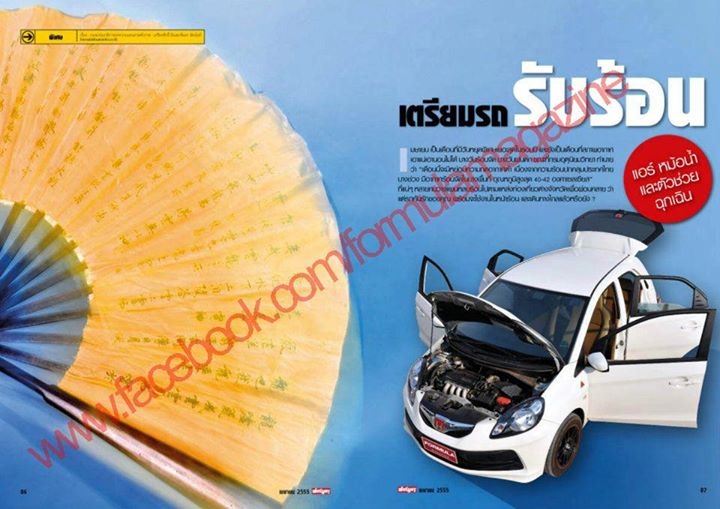
Cars are comparable to humans, needing care and attention. Let's look at how to prepare your car for hot weather, including essential equipment to keep in your vehicle for emergencies. What are they? Let's find out! Air Conditioning, Radiator, and Emergency Aids
Is the Air Conditioning System Ready?
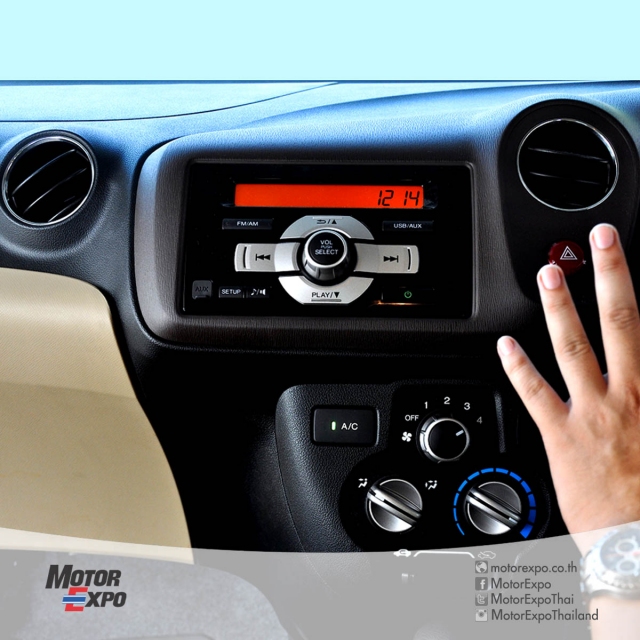
Air conditioner, or the car's air conditioning system, helps lower the temperature inside the car. What are the components of the air conditioning system and how to check them?
Starting with the COMPRESSOR , it uses a part of the engine's power to turn the belt, which rotates the compressor's front pulley. Inside, there's a piston to increase the compression of the refrigerant vapor, which is in a gas state, raising its temperature and pressure. The CONDENSER is where high-pressure refrigerant gathers at the front of the car to receive airflow while the car is moving or from the electric fan to release heat. It's a coiled structure resembling a radiator's honeycomb. When the refrigerant vapor releases heat, its temperature drops, turning it into a liquid that flows out of the condenser to the receiver. The RECEIVER/DRIER, or refrigerant reservoir, is a metal cylinder containing a desiccant. This part is essential because it's a closed system, and the liquid-to-gas ratio of the refrigerant is not constant, depending on usage. Therefore, a reservoir is needed to store the refrigerant in its liquid state.
The EXPANSION VALVE , or pressure reducing valve, is responsible for transporting high-temperature liquid refrigerant, which then flows through the pressure reducing valve. The refrigerant passing through will have lower temperature and pressure, then mixes into a fine mist, flowing to the EVAPORATOR, which technicians often call the A/C evaporator box.
The EVAPORATOR , or A/C evaporator box, transports the mist-like refrigerant, which vaporizes in the winding pipes of the A/C evaporator box to absorb heat from the pipes and honeycomb fins of the A/C evaporator box. The extremely cold refrigerant pipes absorb heat from the air passing through, which is the air inside the passenger cabin, circulated by the electric fan in the A/C evaporator box, with fan speed adjustable from the control switch in the car. This causes the refrigerant to change state from liquid back to vapor, with low temperature and pressure. The refrigerant then re-enters the compressor to release heat at the condenser, continuing this cycle.
Embrace Your Inner Mechanic
Now that you understand how the air conditioning works, it's time to check the A/C system in your beloved car. Here's how to do it easily:
Use Your Senses This method requires some "familiarity" with your car. You need to know the level of coolness when the A/C is working normally, then compare that feeling to the present to see if there's a difference. For example, if you turn on the A/C for a long time and it's still not cool, or if it can't cope with a bit of sun, or if it gets hot quickly at a red light! Alternatively, observe the coolness of the airflow from the A/C vents. If the A/C starts having problems, the coolness will decrease, forcing you to constantly increase the cooling level or fan speed.
Look Through the Sight Glass The refrigerant reservoir or receiver/drier has a small round glass viewing window on top, called the "sight glass." This window is used to check the refrigerant. When the engine is started and the A/C system is on, if the system is complete, the refrigerant will flow through and form bubbles, indicating normal operation. But if you see only a few or no bubbles at all, it means there's too little refrigerant. And if the refrigerant fills the channel with no air bubbles, it means there's too much refrigerant.
Look for Leaks Refrigerant can seep out through various joints at a small rate but cannot disappear on its own, unless there's a leak or slow seepage, which is normal for cars that have been used for many years. Most leaks usually occur in one area. You can notice it by compressor lubricating oil seeping out and leaving a stain. If it's not due to corroded metal parts, it might be degraded rubber hoses or O-rings due to age. If there's a leak at the cooling coil or A/C evaporator box, observe the condensed water dripping onto the road. If there are oil stains mixed in, it's definitely a leak.
Cooling System Must Be Reliable To drive a car to its destination, it's not just about having fuel. Equally important is the cooling system, or engine cooling system, which mechanics often collectively call the "radiator." The radiator is an essential component that every car must have (except older cars that might have air cooling). The engine relies on combustion within the combustion chamber to generate power for propulsion. Therefore, the combustion chamber accumulates very high heat. The cooling system needs coolant to transfer heat from the combustion chamber walls to the outside air, using the radiator's honeycomb structure, with a water valve controlling the circulation, which cycles continuously in this manner.
Check Water Level Water is a crucial part of the cooling process. If the water is at a normal level, it helps efficient cooling. But if the water in the system is low or missing, the cooling efficiency will decrease, leading to abnormally high temperatures, which can easily damage the engine and is a common recurring problem. If you find any abnormalities, you should promptly have it checked at a service center. There might be a water leak at some point, or no leak, but the engine might have issues, such as a cracked cylinder head gasket, etc. Ideally, you should “check the water level” at least “once a month,” even for new cars, as errors can occur (don't be negligent). For older cars, it should be checked more frequently. The process of checking the water level must only be done when the “engine is cold.” If the “engine is hot,” hot water will spray out and harm you.
Electric Fan The electric fan is also an important spare part for cooling, especially when the car is parked and the engine is running. If the fan fails, it won't dissipate heat effectively, leading to dangerously high heat accumulation. Electric fans have a lifespan and operate automatically. Most cars have two fans: one operates with the air conditioning system, and the other operates according to the water temperature, or both might operate simultaneously. Also, observe if the fan, even if working, has enough power. Some might be degraded but not broken, meaning they spin slower, which can also cause overheating. If problems are found, they should be fixed urgently.
Check Water Pump Belt The belt plays a crucial role in rotating the water pump pulley to circulate water in the engine. A perfect belt must be of good quality and not loose, because if it's loose, it will slow down the water pump's rotation, reducing cooling efficiency. If the belt is old, it often becomes brittle and cracked but not yet broken. It's recommended to change it, because if it breaks, the water pump will stop working (including other systems connected to the same belt).
Water Hoses Engine rubber hoses are necessary for water to circulate and dissipate heat within the system. For cars that have been in use for about 2 years, they should be thoroughly inspected. If you find that the rubber hoses are starting to fade, crack, feel flat when squeezed, are not plump, or are swollen, you should replace them quickly. Because if a rubber hose breaks, detaches, or swells until it bursts when exposed to heat, water will spray out, causing problems. If the rubber hoses are still in good condition, check the clamps to ensure they are tight and look at the hose connections. If there are water drips or stains, it indicates a leak, and the cause should be found quickly.
Radiator Cap A radiator cap typically has a spring and a closing valve with a rubber seal inside to maintain pressure in the cooling system. If the radiator cap is old, the rubber seal will harden, become brittle, and detach, causing water to leak out and allowing air into the system, which can lead to overheating. Or, if the radiator cap's spring is weak, it might not be able to maintain normal pressure, causing too much water to flow into the reservoir, and water in the radiator will disappear from the system. If it's not in good condition, it should be replaced, as it only costs a few hundred baht.
Equipment You Should Have in Your Car
In daily car driving, it's impossible to predict when unexpected events might occur, whether on weekdays or weekends. Issues like engine malfunction or problems with the car's operating system, even small things like a flat tire, up to serious matters like unforeseen accidents, all require assistance. Good preparation can alleviate difficulties for yourself and others. But have we prepared the necessary items to assist us in our car?
Car Tool Kit These tools are only for minor repairs or checks. Some people don't even know where their car's tools are stored or what they include. Every car should have a sufficient tool kit for its use. For storage, find something to keep them organized and in place for convenience and neatness.
Let's see what "Car Tools” you should have?
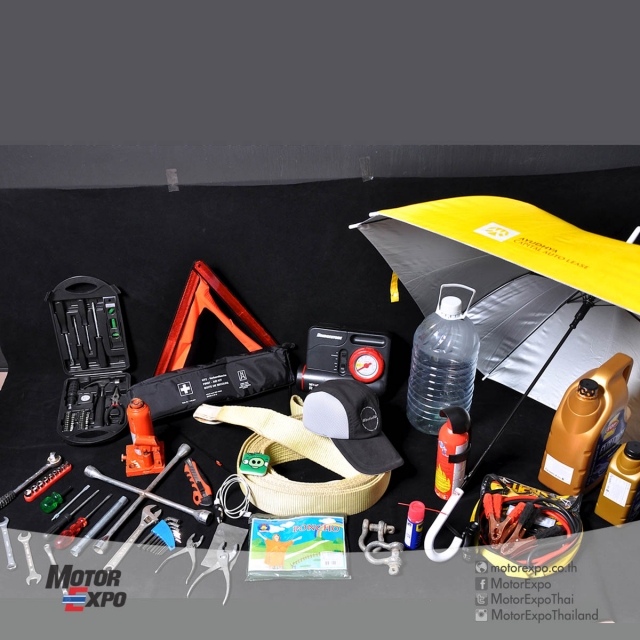
Toolbox Used for storing tools neatly and organized, making them easy to access. However, you should choose a size appropriate for your needs, as they range from small to large boxes.
Screwdrivers You should have both types: flathead and Phillips head, and both short and long versions. This way, you won't be frustrated in tight corners with limited space, unable to continue because you don't have a short screwdriver.
Pliers Another indispensable multi-purpose tool for tasks like squeezing, gripping, clamping, or pulling. You should have both small-jaw (needle-nose) and large-jaw types, and including locking pliers would mean you're ready for any challenge at all times.
Wrenches The formal name for this tool is “kunjae” (key), but due to habit, it has implicitly become “prachaae” (wrench). You should carry sizes from 8 to 23. Any style, whether open-end, box-end, or combination (open-end + box-end), is fine.
Adjustable Wrench In reality, this should probably be called a “restless jaw wrench” because it can be adjusted to fit the head of the nut you want to tighten. Moreover, its size and weight also make it suitable for self-defense.
Sockets Must be carried along with a “ratchet handle,” otherwise, you'd only be able to throw sockets to chase dogs away. And you should also prepare “extension bars” in case you need to work in cramped areas where you can't insert your hand.
Spark Plug Socket Usually found in a car's tool kit, it looks similar to a regular socket but is distinctly longer. Its sole purpose is to remove and replace spark plugs, or to remove them for cleaning.
Sandpaper Choose a medium grit that is neither too coarse nor too fine. Keep it in your toolbox in case you need to clean spark plug electrodes or to clean corroded battery terminals.
Electrical Tape You should have at least one roll in your toolbox. Whether you use it or not, keep it there. You're guaranteed to find a use for it someday.
Hex Keys (Allen Wrenches) If specialized tasks arise, such as tightening a bolt that is flush with the workpiece surface and its head is a hexagonal socket instead of a slot, then it's time for this tool to come out.
Cross Wrench Its name already indicates its shape must be a “+” sign. Its main function is to easily remove and install wheel nuts, much more conveniently than using the L-shaped lug wrench that comes with the car from the showroom.
Combined Tool Set Simple yet convenient to use and carry. There's a wide variety of sets available, both small and large, differing in the range of tools included.
Jack Considered a vital tool in cases where you need to change to a spare tire. Normally, every car comes with a jack. Whatever its form, as long as it's stable and strong, it's suitable for emergencies.
Spare Tire An essential item to have, but car owners often don't appreciate its value and tend to neglect it. Because if there's no bad luck, flat tire, punctured tire, or deflated tire, no one thinks about it. But if the worst really happens, the next tool can help you.
Portable Electric Air Pump Currently widely available, ranging from a few hundred baht to several thousand baht. You can choose one according to your preference, but it's better to choose a brand with a good warranty so you don't get frustrated if problems arise during use.
Multi-Purpose Spray Some call it “universal liquid.” It has a wide range of uses for all seasons, such as preventing or repelling moisture, lubricating, loosening rusty nuts, etc. The can should be compact and easy to carry.
Jumper Cables Most cars on the road today are automatic. So, if the battery is degraded because there's not enough power to send to the starter motor, the only way is to jump-start the battery. Without this equipment, you cannot start the engine.
Tow Rope Even if you don't have the knowledge or understanding of towing a car, it's not harmful to keep one in your car. Currently, many types are available to buy, in various forms to suit your needs.
Engine Oil You should have at least 1 gallon of engine oil at home, and when traveling long distances, if possible, you should carry engine oil with you in case of an unforeseen event that causes the engine oil to run low.
Flashlight An item that should always be kept in the car, and you must regularly check if it still has power, because when you need to use it and the batteries are dead, anyone would want to hit themselves on the head.
Spare Fuses A car is like a house because both use electricity. If the electrical system malfunctions, a fuse helps reduce damage because the fuse will blow first. If you're on the road, what will you do if a fuse blows and you don't have a spare?
Fire Extinguisher Carry one of an appropriate size, and I must say, don't think it's “overkill” because I've seen countless cases where people had to watch their beloved cars burn right before their eyes because they didn't have a fire extinguisher.
Water Container Any type can be used, whether a bottle, cup, bucket, basin, or pot, but with the condition that it can be tightly closed when filled with water to prevent spills. Otherwise, you'll have a big mess to clean up.
Cutter or Scissors Another versatile tool that can be used in many ways to solve immediate problems.
Reflective Triangle Triangular reflective warning signs are now commonly sold. Besides being an accessory included with the car, they should be used when your car breaks down and you have to park on the roadside. Place it a reasonable distance from the car to make it visible to passing vehicles, ensuring the safety of yourself and other road users.
First Aid Kit An important item that in some countries is mandated by law to be in every car. But for us in Thailand, even though it's not mandatory, it would certainly feel much better if every car on the road had a basic first aid kit.
Seasonal Equipment Considered items worth keeping in the car, such as a hat, umbrella, raincoat, etc. And if you don't forget, you should also carry a multi-purpose cloth.
Mobile Phone Charger You should always carry a mobile phone charger or power bank in your car, to be used for contacting help in an emergency. Because if your mobile phone battery dies, it's meaningless.
Cars are comparable to humans, needing care and attention. Let's look at how to prepare your car for hot weather, including essential equipment to keep in your vehicle for emergencies. What are they? Let's find out!